


Why Live
Dear Reader,
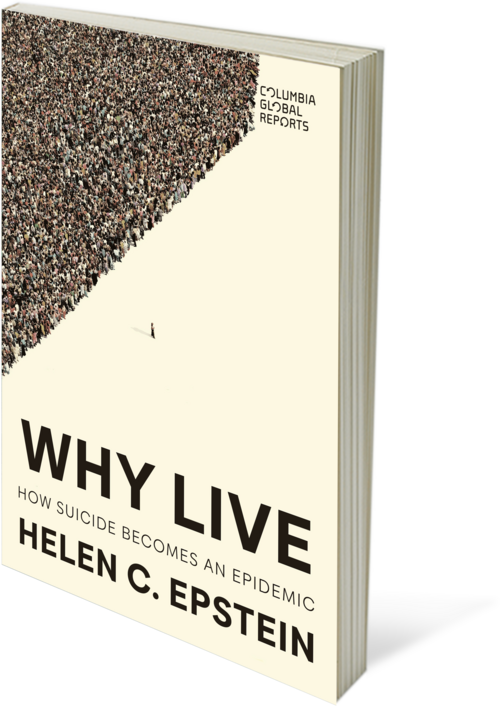
Our culture understands suicide as an individual tragedy, the result of severe mental illness. But suicides come in waves, because suicide is also a social phenomenon, a kind of epidemic set off by particular conditions. One of the foundational works of sociology, Emile Durkheim’s Suicide, understood suicide in late nineteenth century France in that way. Now, in Why Live, the journalist and public health expert Helen Epstein powerfully revives Durkheim’s way of thinking for the twenty-first century.
Epstein opens with a moving account of a friend’s suicide; she fully understands how personal suicide is. Then she describes a number of suicide epidemics, in the United States and elsewhere: the remote Nuvanut region of northern Canada, Micronesia, Russia. In all these places, people experienced a sudden, jarring transition from one kind of life to another, usually entailing an abrupt change from a traditional existence to a modern one. A feeling of profound loss and uncertainty, of familiar values and customs vanishing, is a precondition for what the scholars Ann Case and Angus Deaton have called deaths of despair.
Why Live has a difficult story to tell, but it is meant to offer a measure of hope. All over the world, extreme popular disaffection is on open display. Understanding and addressing what drives it will help us ameliorate many people’s pain, and also can be a way of beginning to restore social peace.
Sincerely,

Nicholas Lemann
Director, Columbia Global Reports
Stay in Touch
Subscribe to our regular newsletter to stay informed about our upcoming books, author events, and more.

Columbia Global Reports is a nonprofit publishing imprint from Columbia University that commissions authors to produce works of original thinking and on-site reporting from all over the world, on a wide range of topics.


© 2026 The Trustees of Columbia University in the City of New York. All Rights Reserved|
Site by ALINE, A Marketing Company