


Why Flying Is Miserable
Dear Reader,
Unless you are extraordinarily lucky, during the past few years you have had a nightmarish experience in an airport: an unconscionably late flight, a cancelled flight, an oversold flight, hours spent on a runway, reduced service. This is not merely a result of bad weather, or even bad management at the airlines. It is a consequence of airline deregulation.
Back in the 1970s, in an atmosphere of growing bipartisan enthusiasm for unimpeded market capitalism, Washington rolled back many forms of economic regulation that began during the New Deal. Aviation was at the head of a line that eventually included trucking, finance, broadcasting, and other industries. The Civil Aeronautics Board, which oversaw airlines’ routes and prices, was abolished. The expectation was that deregulation would lead to lower prices and more competition. The first arguably happened, though often at the expense of service quality; the second did not. After a few years, the airline industry wound up more concentrated than it had been before.
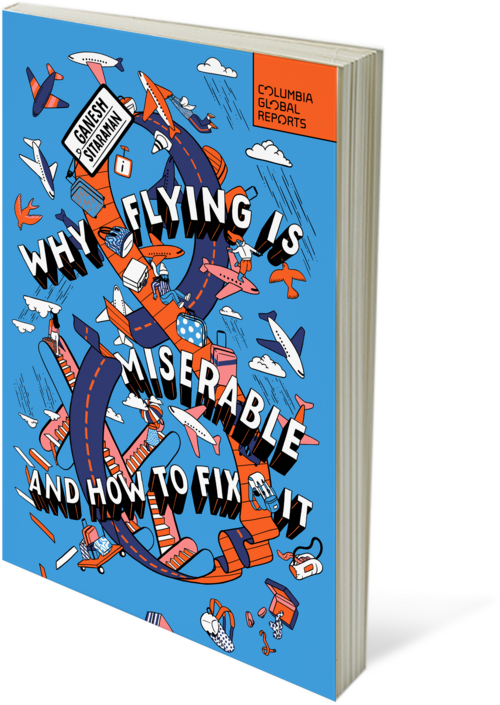
In Why Flying Is Miserable, Ganesh Sitaraman, a brilliant young law professor and policy advisor, offers a spirited account of the hopeful origins and recent failures of airline deregulation. Anybody who flies regularly will find it revelatory as an explanation of their experiences. It is also indispensable as a case study that demonstrates who, after a half-century run, the tide of deregulation is finally beginning to recede.
Sincerely,

Nicholas Lemann
Director, Columbia Global Reports
Stay in Touch
Subscribe to our regular newsletter to stay informed about our upcoming books, author events, and more.

Columbia Global Reports is a nonprofit publishing imprint from Columbia University that commissions authors to produce works of original thinking and on-site reporting from all over the world, on a wide range of topics.


© 2026 The Trustees of Columbia University in the City of New York. All Rights Reserved|
Site by ALINE, A Marketing Company