


The Subplot
Dear Reader,
Most Western readers assume that if they ignore Chinese literature entirely, they won’t be missing much. Surely the Chinese government’s relentless opposition to freedom of expression must have snuffed out any truly interesting or creative publication.
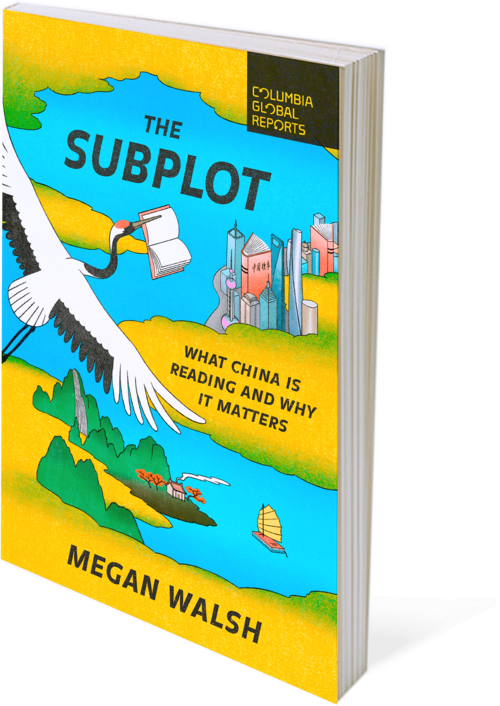
In The Subplot, Megan Walsh, a brilliant young journalist and critic, makes a persuasive and fascinating case that such assumptions are wrong. In a country as vast and varied as China, readers can find their way to a great deal of writing that lives outside the official confines of state-sanctioned publication. Using a combination of investigative curiosity and critical acuity, Walsh lays out, to quote her, “a whole new taxonomy of Chinese literature: a vast migrant-worker poetry movement; class-conscious youngsters; a stressful generational divide; ‘rotten girl’ homoerotics; underground comics; ‘face-slapping’ web novels; CCP-friendly corruption capers, and ethnic outsider stories, not to mention what is widely hailed internationally as a golden-age of Chinese sci-fi.”
Because most of this material is not openly political, and because much of it is available only online, and sometimes only temporarily, it has a de facto freedom. Walsh, having located it, taken it seriously, and avoided getting hung up on what is and isn’t “literature,” had been able to give us an arrestingly fresh picture not just of Chinese writing, but of Chinese society. You’ll finish The Subplot understanding the unruliness, the distinctive obsessions, and the major fractures in China far more fully than you would from reading conventional news coverage of the world’s most populous country.
Best,

Nicholas Lemann
Director, Columbia Global Reports
Stay in Touch.
Subscribe to our regular newsletter to stay informed about our upcoming books, author events, and more.

Columbia Global Reports is a nonprofit publishing imprint from Columbia University that commissions authors to produce works of original thinking and on-site reporting from all over the world, on a wide range of topics.


© 2026 The Trustees of Columbia University in the City of New York. All Rights Reserved|
Site by ALINE, A Marketing Company