


The Revolt Against Humanity
Dear Reader,
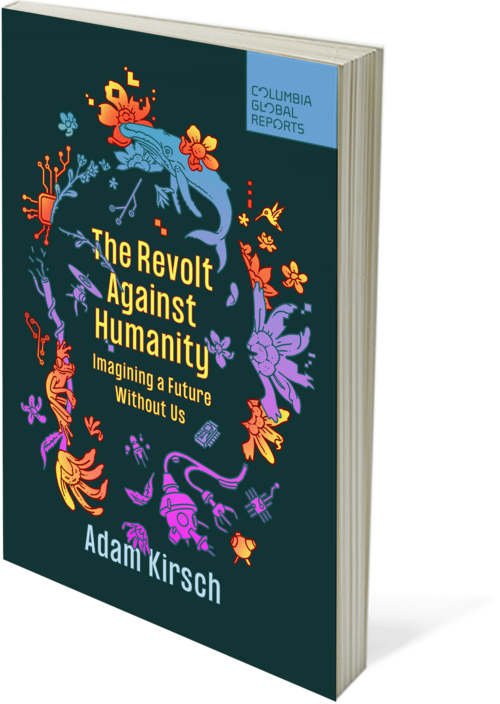
We at Columbia Global Reports consider ourselves to be a news organization, but sometimes news can be a big idea, rather than a big event. In The Revolt Against Humanity, Adam Kirsch, one of our leading critics, calls our attention to an arresting new idea, representing a major departure from our dominant cultural traditions: that humans should not be, and soon will not be, the dominant force on the planet. Kirsch identifies two strains of what he called posthumanism. One, which he calls Anthropocene antihumanism, holds that we humans have done such a poor job in our stewardship of the earth that we no longer deserve to play our historic role, and soon will not. The other, which he calls transhumanism, is much more optimistic in its way. It imagines that technological advances will soon burst through the boundaries of time, space, and cognition that have always defined our existence.
None of this will happen tomorrow; even if it never happens, that so many leading-edge thinkers are contemplating it is a sign of our times. With dazzling range and facility, Kirsch has identified and drawn together many disparate strands, from literature, philosophy, science, and popular culture that will make you see the current moment in a new light. He writes as a cogent observer of posthumanism, not as a champion of it. By the end of The Revolt Against Humanity, you will likely find yourself intrigued by Kirsch’s big idea, but also skeptical that it can stand as either a description of or a blueprint for any world where we might want to live.
Best,

Nicholas Lemann
Director, Columbia Global Reports
Stay in Touch.
Subscribe to our regular newsletter to stay informed about our upcoming books, author events, and more.

Columbia Global Reports is a nonprofit publishing imprint from Columbia University that commissions authors to produce works of original thinking and on-site reporting from all over the world, on a wide range of topics.


© 2026 The Trustees of Columbia University in the City of New York. All Rights Reserved|
Site by ALINE, A Marketing Company