


Reclaiming the Internet
Dear Reader,
The open Internet began in a spirit of soaring libertarian optimism. No longer would a handful of gatekeepers have the power to decide what was and wasn’t published to a broad audience. Instead, the Internet would be set up as a free-speech paradise, where anyone could say anything and anyone could read anything. This meant that the Internet operated under the protection of the First Amendment. In 1996, Congress doubled down on the Internet’s protected status by enacting Section 230 of the Communications Decency Act, which absolved purveyors of online content from legal liability for what they made available to the public.
Then came the advent of Internet platforms and social networks, which have become among the largest and most profitable businesses in the world. In economic terms, companies like Alphabet and Meta are really in the business of collecting data about their users and using it to sell advertising, but because of Section 230 they operate behind a highly advantageous shield that entitles them, unfairly, to the privileges this country provides to free speech.
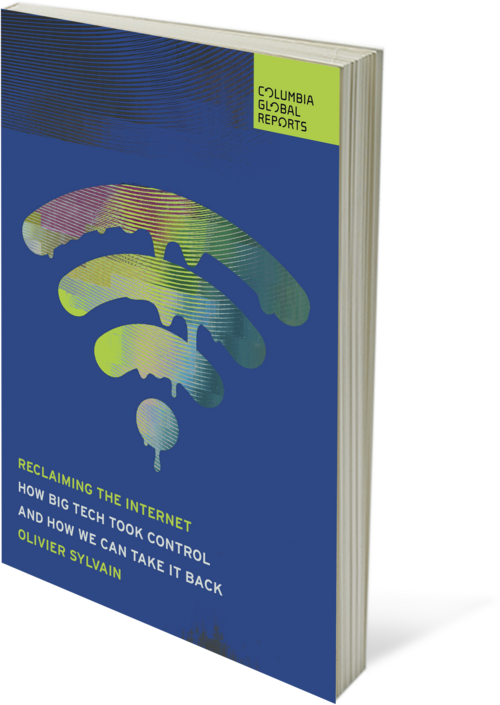
Olivier Sylvain, a law professor, former senior advisor to the Federal Trade Commission, and leading scholar on Internet regulation, has written a paradigm-changing book about the relationship between the Internet giants and the law. Reclaiming the Internet argues that by redefining the Internet giants as commercial enterprises rather than speech platforms, we can restore the promise of this all-powerful medium as a force for good in people’s lives. With clarity, deep knowledge, and moral force, Sylvain makes a powerful case, one with the potential to change the conversation on an essential topic.
Sincerely,

Nicholas Lemann
Director, Columbia Global Reports
Stay in Touch
Subscribe to our regular newsletter to stay informed about our upcoming books, author events, and more.

Columbia Global Reports is a nonprofit publishing imprint from Columbia University that commissions authors to produce works of original thinking and on-site reporting from all over the world, on a wide range of topics.


© 2026 The Trustees of Columbia University in the City of New York. All Rights Reserved|
Site by ALINE, A Marketing Company