


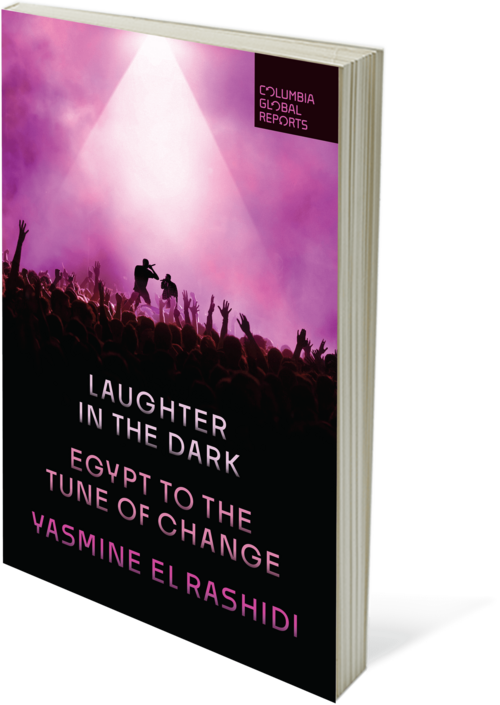
Laughter in the Dark
Dear Reader,
In the second decade of this century, Egypt was on a political rollercoaster: the uprising of Arab Spring, followed by the end of Hosni Mubarak’s regime, followed by the brief reign of the Muslim Brotherhood, followed by its being deposed in a coup, followed by control by Abdel Fattah el-Sisi’s military regime. Since those attention-getting events, Western readers have not paid close attention to Egypt.
Yasmine El Rashidi, one of Egypt’s leading independent journalist/intellectuals, began the third decade of this century feeling optimistic about the prospects for a democratic revival in Egypt, something the rest of the world had evidently given up on. In Cairo, where she lives, she was hearing the work of young popular musicians who were giving voice to deep dissatisfaction with Egypt’s government, and the overall state of Egyptian society and culture. Could this be the start of a movement?
El Rashidi’s investigation of the proliferating hip-hop, rap, and trap music scene in Egypt led her to create, in Laughter in the Dark, a memorable and utterly fresh account of the rise of young music stars like 3enba, Abuyusif, and Mohamed Ramadan. She also found that the Sisi regime is adept at coopting musicians as they become popular, by offering them access to large audiences for their work in return for toning down their political stances. El Rashidi wound up with a less cheerful view of Egypt’s political future than she had expected to have, but nonetheless with a riveting portrait of the country today, especially its youth culture. Laughter in the Dark is as vivid and insightful as any journalism about Egypt we have seen in years.
Best,

Nicholas Lemann
Director, Columbia Global Reports
Stay in Touch.
Subscribe to our regular newsletter to stay informed about our upcoming books, author events, and more.

Columbia Global Reports is a nonprofit publishing imprint from Columbia University that commissions authors to produce works of original thinking and on-site reporting from all over the world, on a wide range of topics.


© 2026 The Trustees of Columbia University in the City of New York. All Rights Reserved|
Site by ALINE, A Marketing Company