


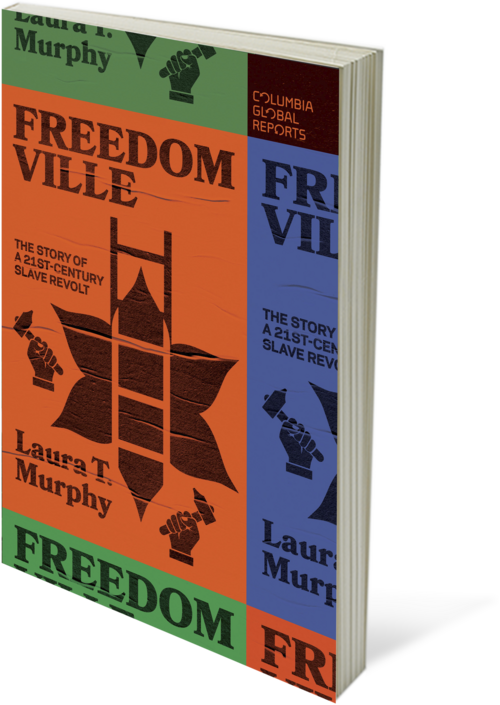
Freedomville
Dear Reader,
Most people think of slavery as an institution consigned to the long-ago past, but it’s not. Tens of millions of people all over the world are still enslaved, mainly in the form of oppressive and inescapable credit systems that bind them into lifelong commitments to hard labor for cruel employers. India has more de facto slaves than any other nation, and the northern state of Uttar Pradesh has more than any other Indian state.
In Freedomville, Laura Murphy, a leading scholar and activist on modern slavery, tells the story of a remote mining village called Sonbarsa, where members of one caste, the Patels, have enslaved members of another, the Kols, for centuries. In 2000, the people in one section of the village managed to free themselves and to set up an independent community called Azad Nagar. This is a rare and celebrated success story in a grim global landscape.
When Murphy visited Azad Nagar, she heard inspiring stories about its people’s courage and determination. She also found out that what really happened there is not the neatly packaged narrative of heroism that she had heard about for years. Like real life, it’s messier and less successfully resolved. Freedomville combines extraordinary narrative power and immediacy with a call to pay attention to the problem of slavery that can’t be ignored.
Best,

Nicholas Lemann
Director, Columbia Global Reports
Stay in Touch
Subscribe to our regular newsletter to stay informed about our upcoming books, author events, and more.

Columbia Global Reports is a nonprofit publishing imprint from Columbia University that commissions authors to produce works of original thinking and on-site reporting from all over the world, on a wide range of topics.


© 2026 The Trustees of Columbia University in the City of New York. All Rights Reserved|
Site by ALINE, A Marketing Company