


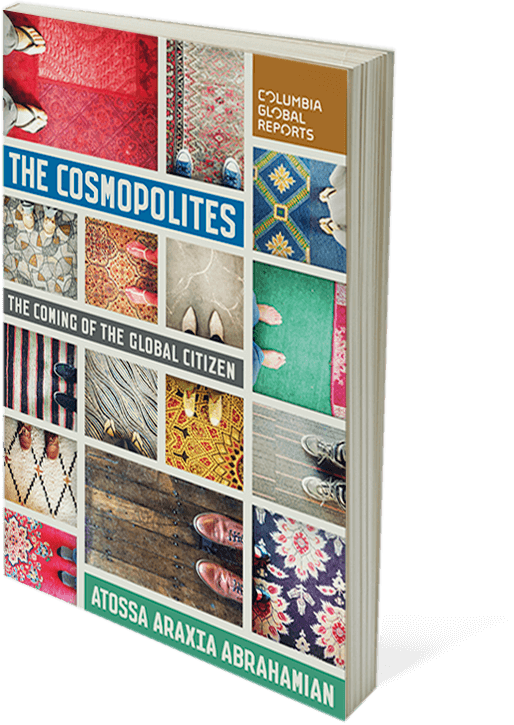
The Cosmopolites
The Coming of the Global Citizen
By Atossa Araxia Abrahamian
Journalist Atossa Araxia Abrahamian traveled the globe to understand how citizenship has become a marketable commodity, introducing us to “cosmopolites,” or citizens of the world, who inhabit a new, borderless realm where things can go very well, or very badly.
$12.99
ISBN: 9780990976363
ebook ISBN: 9780990976370
On Sale: November 10, 2015
Pages: 166
Overview
The buying and selling of citizenship has become a thriving business in just a few years. Entrepreneurs and libertarians are renouncing America and Europe in favor of tax havens like Singapore and the Caribbean. But as journalist Atossa Araxia Abrahamian discovered, the story of twenty-first-century citizenship is bigger than millionaires seeking their next passport.
When Abrahamian learned that a group of mysterious middlemen were persuading island nations like the Comoros, St. Kitts, and Antigua to turn to selling citizenship as a new source of revenue after the 2008 financial crisis, she decided to follow the money trail to the Middle East. There, she found that the customers of passports-in-bulk programs were the United Arab Emirates and Kuwait, oil-rich countries that don't want to confer their own citizenship on their bidoon people, or stateless minorities who have no documentation.
In her timely and eye-opening first book, Abrahamian travels the globe to meet these willing and unwitting “cosmopolites”, or citizens of the world, who inhabit a new, borderless realm where things can go very well, or very badly.
No Upcoming Events
About the Author
Atossa Araxia Abrahamian is an opinion editor at Al Jazeera America, a longtime editor and contributor at The New Inquiry, and a contributing editor to Dissent magazine. Her writing has appeared in The New York Times, New York magazine, the London Review of Books, and other publications. She has also worked as a general news and business reporter for Reuters. She grew up in Geneva, Switzerland, and studied philosophy as an undergraduate at Columbia University, where she returned to study investigative reporting at the Graduate School of Journalism. She lives in Brooklyn.

Similar Titles




Be the Most Interesting Person
in the Room
Subscribe to Columbia Global Reports Books
Find new ways of looking at the world with Columbia Global Reports. Our $85 subscription includes six paperbacks mailed in advance of publication directly to your doorstep.
Support Our Work
If you believe in the power of journalism to shape our world, we invite you to join our vibrant community of supporters. Your contribution will enable CGR to continue publishing compelling stories that illuminate global challenges and empower global citizens.
Stay in Touch
Subscribe to our regular newsletter to stay informed about our upcoming books, author events, and more.

Columbia Global Reports is a nonprofit publishing imprint from Columbia University that commissions authors to produce works of original thinking and on-site reporting from all over the world, on a wide range of topics.


© 2026 The Trustees of Columbia University in the City of New York. All Rights Reserved|
Site by ALINE, A Marketing Company